Our Solar System
The Eight Planets
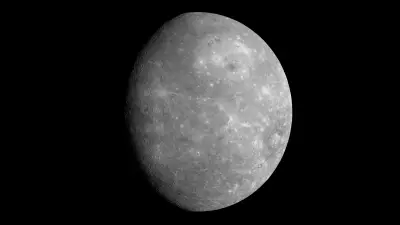
The smallest planet in our solar system, Mercury's heavily cratered surface endures the most extreme temperature swings. Without an atmosphere to retain or deflect heat, its surface swings from −173 °C at night to 427 °C at noon — all within a single Mercury day.
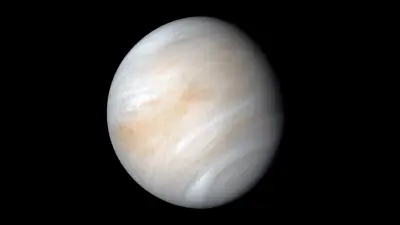
Shrouded in thick clouds of sulfuric acid, Venus is Earth's twisted twin. Its runaway greenhouse effect pushes surface temperatures to 462 °C — hot enough to melt lead — while atmospheric pressure is 92 times that of Earth. It also rotates backwards relative to most planets.
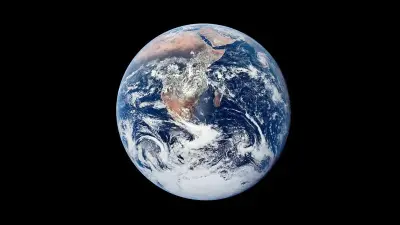
The only known world harboring life, Earth's liquid oceans, oxygen-rich atmosphere, and magnetic field create a rare sanctuary in the cosmos. Photographed from the Moon in 1972 as the "Blue Marble," our planet appears as a fragile jewel suspended in the void.
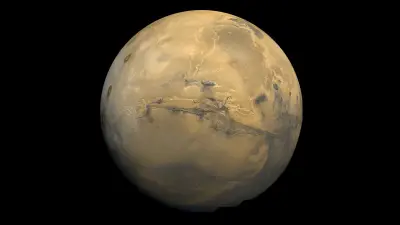
Mars hosts Olympus Mons — the solar system's tallest volcano at 21.9 km — and ancient river valleys suggesting a once-wetter past. Polar ice caps of water and CO₂ frost survive today. NASA's Perseverance rover is actively searching for signs of ancient microbial life.
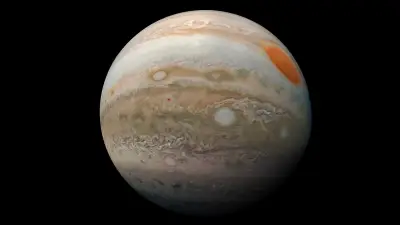
Jupiter's Great Red Spot — a storm wider than Earth — has raged for over 350 years. So massive that all other planets could fit inside it, Jupiter acts as the solar system's gravitational shield, deflecting comets and asteroids that might otherwise threaten the inner planets.
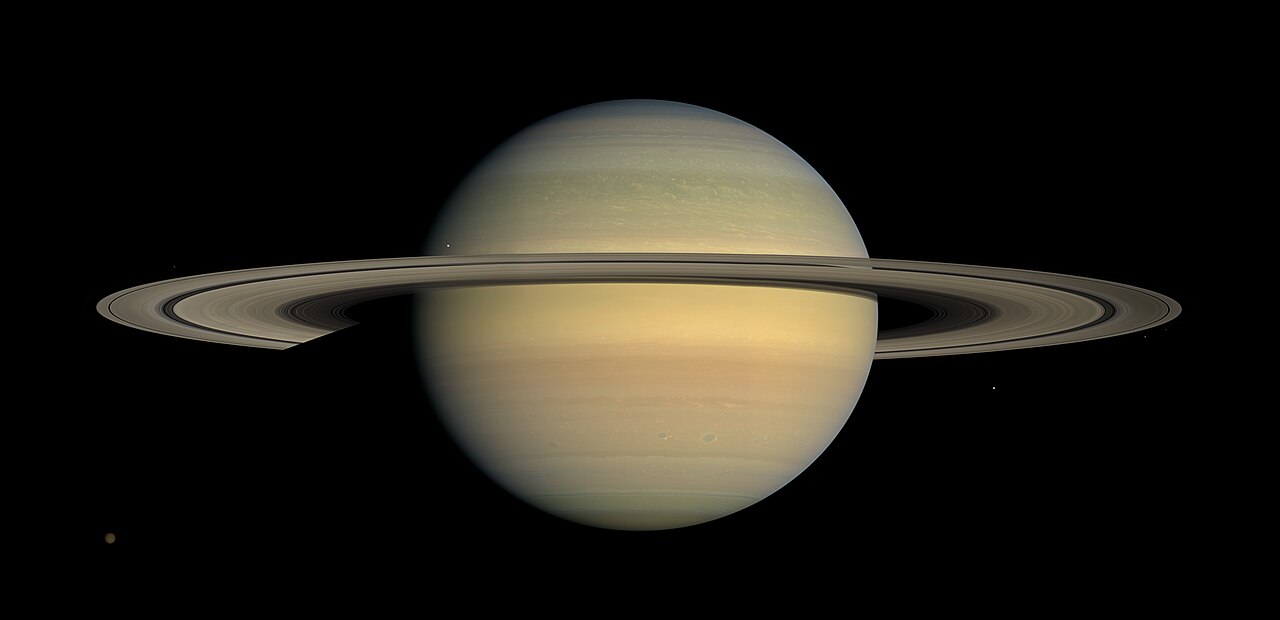
Saturn's breathtaking ring system spans 282,000 km but is only about 10 meters thick — paper-thin on a cosmic scale. The rings are made of ice and rock ranging from dust grains to house-sized boulders. Saturn is so low-density it could theoretically float on water.
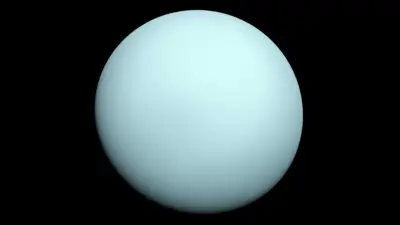
Uranus rolls around the Sun on its side — its axial tilt of 97.8° is thought to result from a massive primordial collision. This creates extreme 42-year seasons of continuous sunlight followed by 42 years of total darkness. Its pale cyan color comes from methane in its atmosphere absorbing red light.
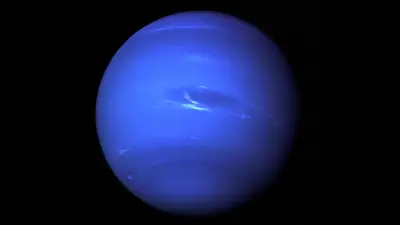
Neptune's supersonic winds reach 2,100 km/h — the fastest in the solar system — driven by internal heat rather than sunlight. Its largest moon Triton orbits in the opposite direction to Neptune's rotation, and is slowly spiraling inward; in ~3.6 billion years it will be torn apart to form a ring system rivalling Saturn's.